Ceramic Restorations
Ceramic Restorations
Ceramic restorations represent the most refined and durable solution in modern restorative dentistry. When used with care, precision, and a strong understanding of function, ceramics can restore both beauty and structural integrity to teeth that have been weakened, damaged, or compromised by time, trauma, or previous treatments. In prosthodontics, ceramics are not a cosmetic shortcut — they are a functional reconstruction tool rooted in biology and biomechanics.
The decision to use ceramic restorations typically follows a carefully phased treatment process. When teeth have been properly positioned through orthodontic treatment and assessed for structural integrity, ceramic restorations can be used to finalize a smile — especially in cases where composite is not sufficient due to advanced wear, complex esthetic demands, or when the longevity of the material becomes essential.
The process begins with a comprehensive functional and aesthetic evaluation. As always, a diagnostic wax-up is created, allowing us to define the ideal tooth shapes, positions, and occlusal scheme. This wax-up not only helps visualize the end result but also guides temporization and ultimately informs the fabrication of the ceramic restorations. These steps ensure that the final outcome is predictable and fully customized to the patient’s facial features and bite dynamics.
Modern ceramics — such as lithium disilicate and zirconia — offer exceptional strength, biocompatibility, and a natural appearance. They reflect light like enamel and can be layered or stained to match the character and translucency of natural teeth. Depending on the indication, ceramics can be used for veneers, onlays, crowns, or even full-mouth rehabilitations. Their application is always tailored to the patient's needs and guided by minimally invasive principles.
In cases where previous restorations have failed, or where composite has reached the limits of its performance, ceramics provide a stable, long-term solution. They are especially well-suited for patients with high aesthetic demands or heavy function (such as parafunction or bruxism) where stronger, more wear-resistant material is necessary. When bonded properly to enamel, ceramic restorations can last decades with minimal maintenance, blending seamlessly into the natural dentition.
Importantly, ceramic restorations are not about creating a fake or artificial look. When planned and executed by a prosthodontist, they are used to restore what is missing — not to cover up what is already healthy. The philosophy remains the same: preserve as much natural tissue as possible and add only what is necessary to return the system to harmony.
From a single ceramic veneer to a full-arch rehabilitation, the goal is always the same: to provide a smile that is functional, durable, and indistinguishable from nature. Ceramics are not the starting point of care — they are often the final step in a sequence of precise, carefully considered treatments designed to achieve long-term success. When all other factors are aligned — position, structure, and function — ceramics become the perfect finishing touch.
Clinical result
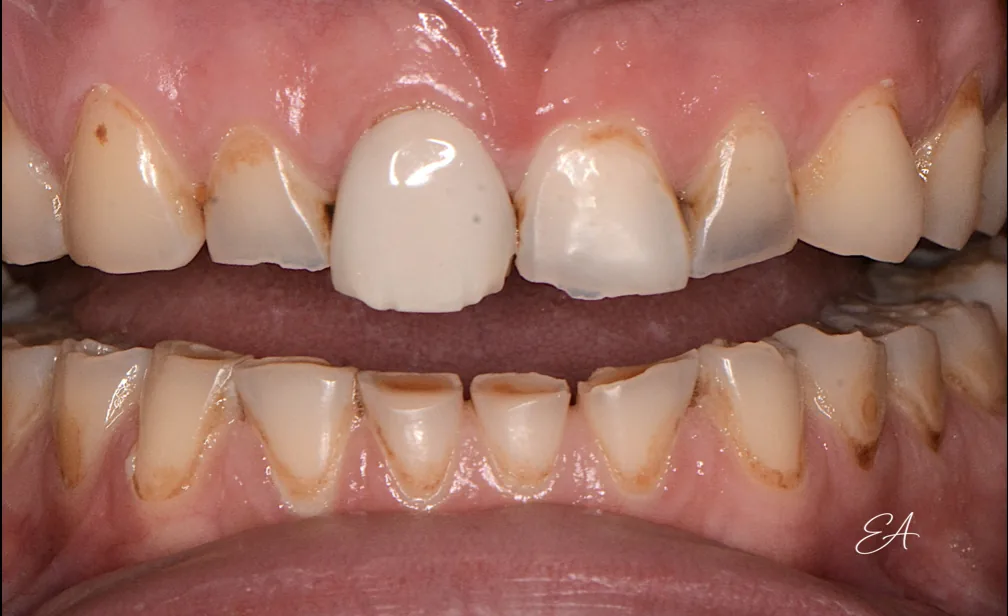
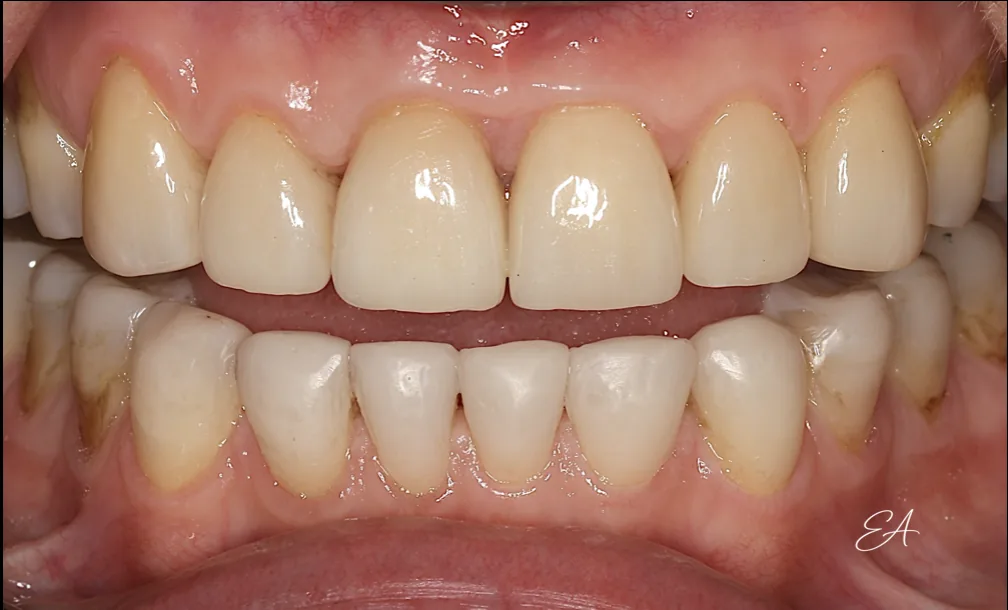
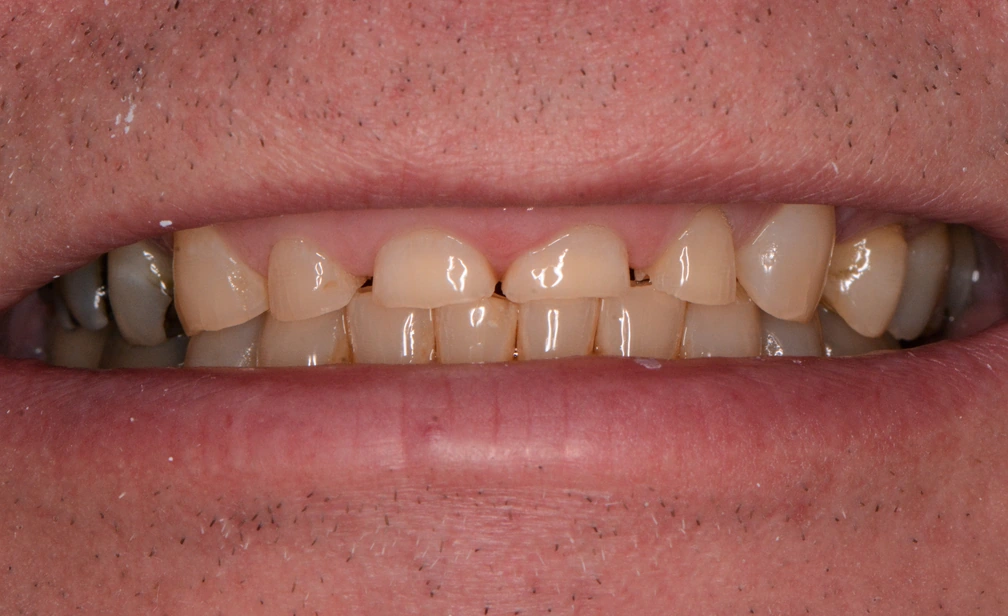
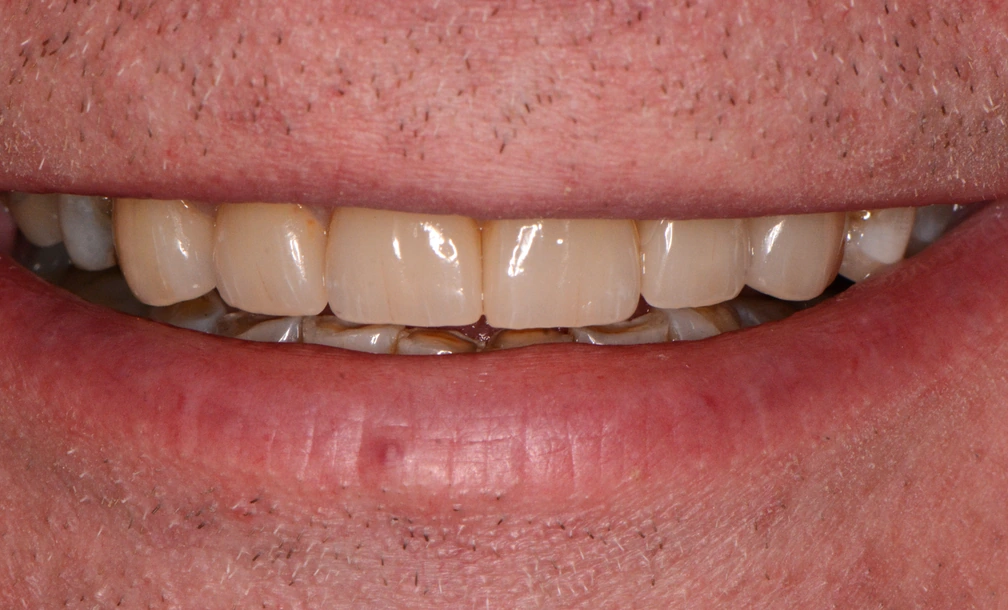
Ceramic Restorations
Ceramic veneers and crowns are recommended in cases requiring long-term durability or when aesthetic demands exceed what composite can offer. Pricing varies based on complexity and material:
- Single ceramic veneer (porcelain): €1,200 – €1,700 per tooth
- Advanced smile makeovers (multiple veneers): available upon consultation
Each ceramic case includes digital planning, wax-up, temporization, and hand-layered ceramics crafted by expert technicians. We aim for minimal preparation and maximal preservation of healthy tissue.